DentistGuide editorial team ·
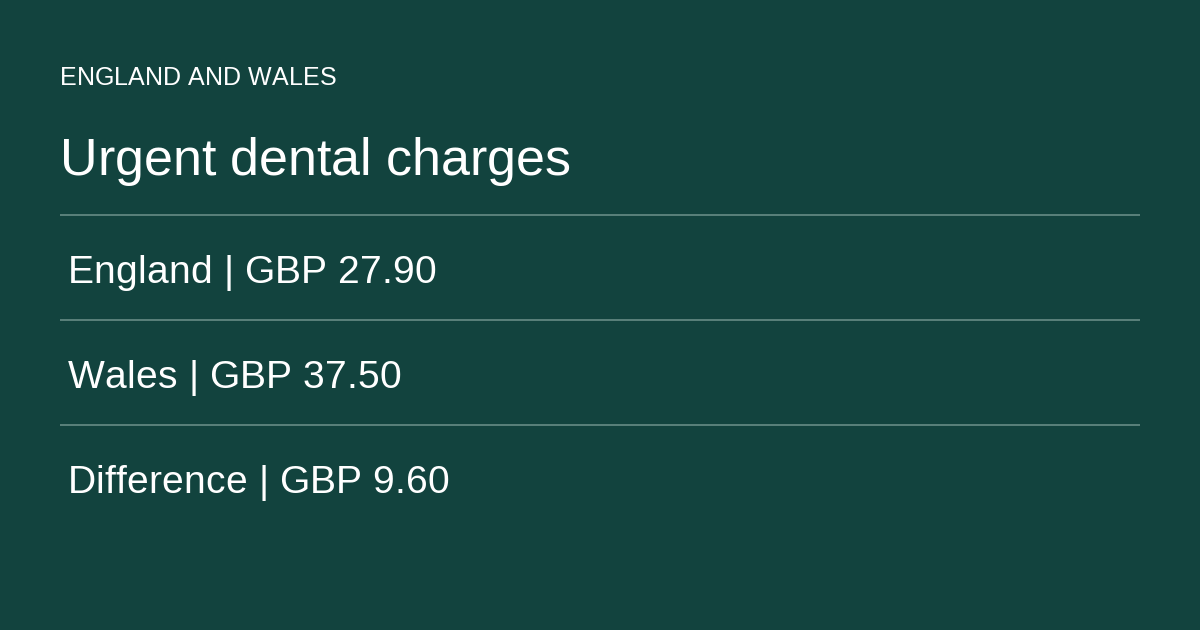
What exactly does the £9.60 difference buy?
Suppose you spend part of the year in Bristol and part in Cardiff. You are comparing what a practice in each place might charge for an urgent NHS appointment. Write down the country of treatment, the date of the appointment, whether the practice is offering NHS care and what kind of appointment it is. Only after those details match the official price category does subtraction give a meaningful answer. A practice may have availability for one type of booking while you were expecting another.
The comparison also ends at the boundary of the course or package described. If a clinician addresses an immediate problem and asks you to return for planned work, ask which visit belongs to which course of treatment. A charge for urgent attention cannot tell you what it will cost to complete a restoration in another city. Nor can a price table establish whether it is sensible to wait until you reach the cheaper location. If you need urgent attention, seek advice where you are.
Why the adult assessment figures tell a different story
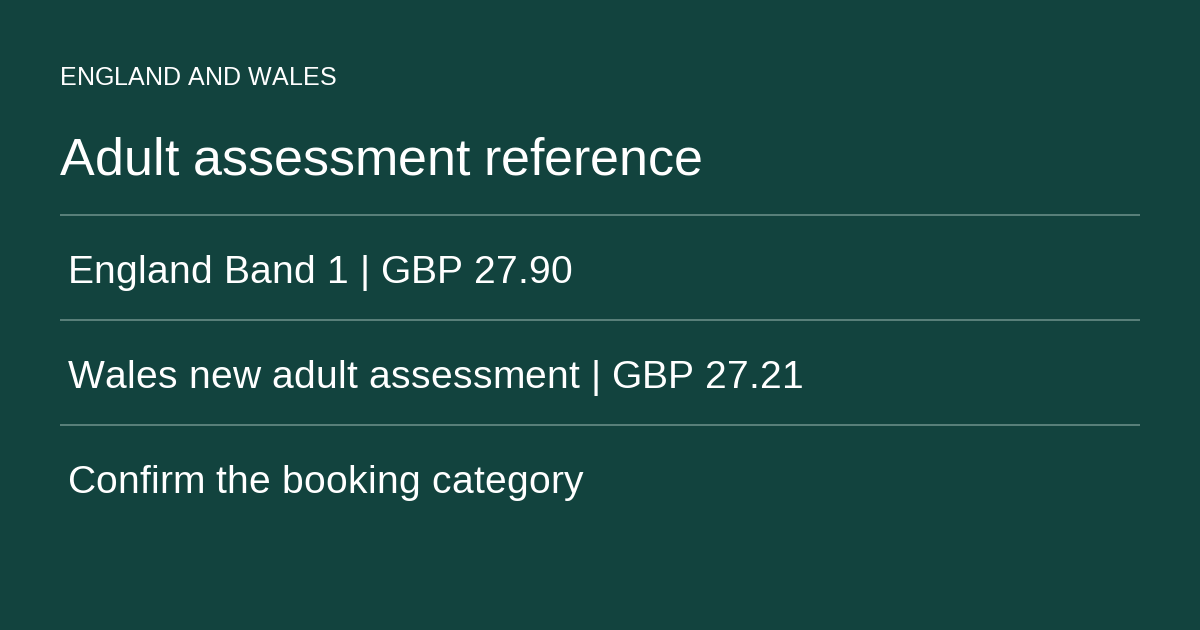
England lists a Band 1 charge of £27.90. Wales lists £27.21 for a new patient assessment for someone aged eighteen or over. The arithmetic difference is 69 pence. Notice that the labels changed: one figure is a band and the other is a named assessment package. Keep those labels when explaining the costs to a travelling companion. Describing both amounts as the price of a check-up, without qualification, suggests more equivalence than the schedules establish.
Imagine a visitor who asks whether images are included. A useful reply tells them what the dentist considers necessary and how that item is billed under the proposed arrangement. A reply that says only “the first visit costs about twenty-eight pounds” leaves the question open. In England the NHS explains that Band 1 can include clinically needed X-rays. That statement alone tells you nothing about the bill for a privately booked image or what another provider will accept before a second opinion.
Read an English band as a course of treatment
England's published charges for bands 2 and 3 are £76.60 and £332.10 respectively. The NHS explains that for care across different bands within a single course, the patient pays the highest applicable band charge. Someone adding all three figures together to price one course would substantially overstate the amount. Conversely, someone carrying a Band 1 figure into every future appointment could understate what a separate course costs. Ask the practice to mark which work the current plan covers.
A useful example is a patient whose plan changes after the examination. The question for reception is whether the revised work is part of the same course and what total charge applies now. Keep the amount already paid on a separate line. If the bill shows a balance, that distinction lets you explain why the balance and the overall price differ. It also avoids counting a payment twice when entering receipts into a travel budget.
Read a Welsh package by its name
In Wales the April schedule identifies distinct packages, including simple restorative care at £36.03 and extensive restorative care at £68.75. Those names are information for reading a proposed plan. They are insufficient for deciding which package your own tooth needs. A photo sent from your hotel cannot settle that question. Ask the treating practice what it intends to provide, the patient charge that applies and whether a later appointment would carry another charge.
There is another reason to keep the full source beside your notes. The Welsh schedule includes examination exemptions based on age. A standard published charge may therefore be different from what an individual actually owes. Tell the practice your circumstances and ask what evidence it needs. If someone else is paying on your behalf, give them the confirmed amount and any conditions attached to it. A screenshot of the table is a reference, not an individual eligibility decision.
Put travel costs on a second line
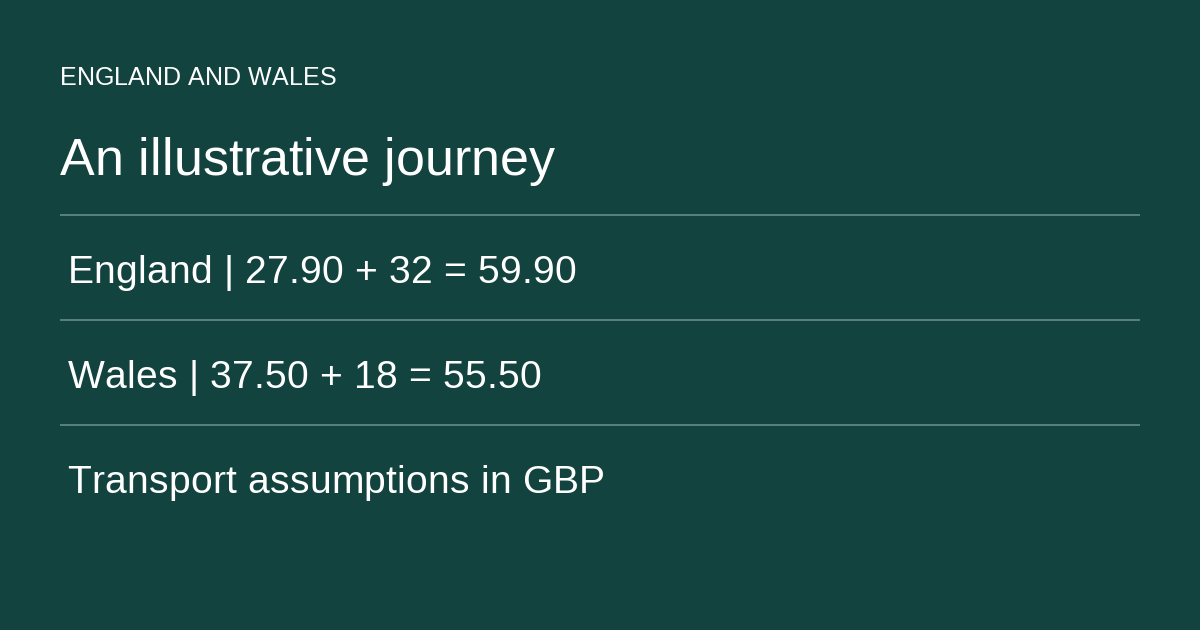
Take an illustrative journey where the Welsh appointment involves £18 in transport and the English appointment involves £32. Under the narrow assumption that both are available, clinically suitable NHS urgent appointments at the standard charge, the respective totals are £55.50 and £59.90. Here the larger patient charge leads to the smaller cash outlay. The transport numbers are invented to show the calculation. Replace them with fares for your own route and time.
If a second visit is possible, add a separate scenario rather than quietly assuming a return fare of zero. Write down whether you would already be in town, need to change a ticket or need another night away. Give a companion's fare its own entry. An amount you will pay whatever happens belongs on both sides of the comparison or on neither. This keeps a small headline fee difference from dominating a decision that is really about availability and continuity.
What to ask before accepting the appointment
Try this wording on the telephone: “I am visiting on Thursday. Is the appointment you are offering NHS or private? Is it for urgent care or a planned assessment? What charge would apply to me, and what would you discuss separately if I need further treatment?” Read the answers back before the call ends. If the first person cannot confirm the charge, record who will clarify it and when you should expect an answer.
When comparing a private overseas estimate with these figures, start a fresh column headed with the provider's name and currency. Match the actual work, follow-up and payment terms before drawing conclusions about savings. Keep the exchange rate and its date separate from the clinical estimate. On DentistGuide you can request an itemised quote and attach the questions that remain open. A useful response gives you an identifiable service, a dated amount and someone who can explain a change before you agree to it.